Adaptive Tournament Designs Integrating Poker, Blackjack, and Baccarat with Layered Incentive Programs
Blake Fischer · Oct 11, 2026

Adaptive Tournament Designs Integrating Poker, Blackjack, and Baccarat with Layered Incentive Programs
Adaptive tournament designs combine poker, blackjack, and baccarat into unified competition frameworks that adjust in real time based on participant performance metrics and game progression stages. These structures allow players to move between table variants within a single event while accumulating points that feed into multi-tier reward systems. Data from industry tracking shows participation rates in such hybrid formats rose steadily through 2025, with further gains reported in October 2026 when several platforms released updated seasonal schedules.
Core Mechanics of Game Integration
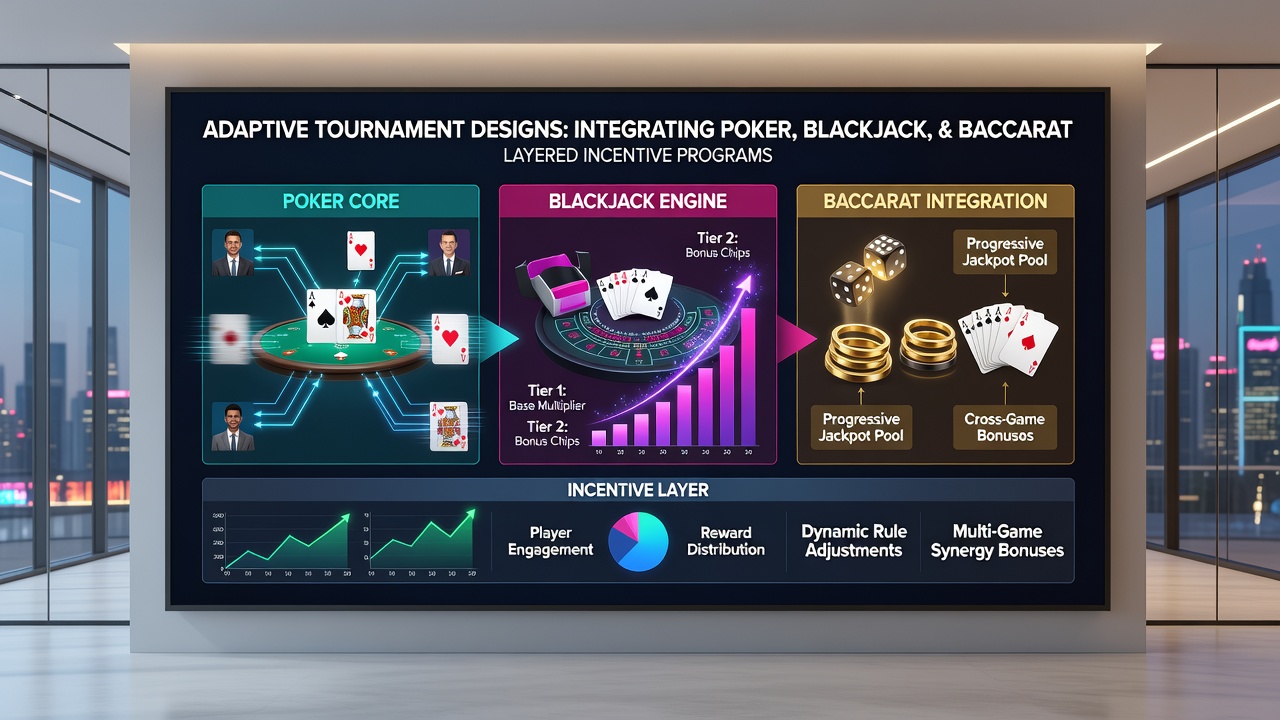
Designers create seamless transitions by standardizing scoring algorithms across the three games so that a strong blackjack hand converts directly into poker chip equivalents or baccarat commission credits. Players start in one discipline then receive prompts to switch tables when certain thresholds are met, which keeps session momentum high without requiring separate registrations. Observers note that this flexibility reduces downtime and encourages broader skill development because participants must handle varied rulesets under the same leaderboard constraints.
Layered incentive programs sit on top of these mechanics through progressive tiers that unlock based on cumulative results rather than isolated wins. Early layers offer entry-level bonuses such as extra starting stacks while mid-level rewards include fee waivers for future events and top tiers provide direct cash equivalents or exclusive table access. Research indicates these systems maintain engagement longer than flat-prize structures because each completed layer resets the next target with visible progress markers.
Implementation Across Platforms
Operators deploy these designs primarily through mobile applications that sync live dealer feeds with automated scoring overlays. When a player completes a poker round the system immediately calculates equivalent blackjack or baccarat value and adjusts the shared tournament pot accordingly. Figures from regulatory filings reveal that platforms using this approach recorded average session lengths 18 percent longer than single-game events during the first half of 2026.
Security protocols ensure fair conversion rates between games by employing encrypted random number generators alongside live dealer verification. Tournament directors can pause switches during high-stakes moments to prevent strategic exploitation while still allowing voluntary movement between variants. Those who have studied player behavior patterns report that the combination of choice and structured rewards produces more consistent retention across demographic groups compared with traditional single-discipline brackets.
Regional Developments and Data Trends
North American operators began testing integrated formats in late 2025 with measurable uptake in both land-based and online segments. According to Nevada Gaming Control Board reports hybrid events accounted for a growing share of total tournament revenue by October 2026. European and Asian markets followed similar trajectories though regulatory frameworks differ in how incentive layers may be advertised and distributed.
Academic analysis from gaming research centers highlights that layered programs reduce the impact of variance because participants earn incremental benefits even when overall placement remains mid-pack. This structure proves particularly effective in baccarat-heavy segments where natural house-edge differences could otherwise discourage cross-game participation. The approach also supports responsible play tools by capping maximum daily incentive redemptions within the tournament software itself.
Future Outlook Through 2027
Platform updates scheduled for early 2027 aim to refine real-time adaptation further by incorporating predictive analytics that suggest optimal game switches based on historical performance data. Industry groups such as the European Gaming and Betting Association have published guidelines encouraging transparent disclosure of conversion rates and tier requirements to maintain player trust. Continued monitoring through the remainder of 2026 will determine whether these designs sustain growth or require additional adjustments to incentive pacing.
Conclusion
Adaptive tournament designs that weave poker, blackjack, and baccarat together with layered incentives represent a measurable shift in how operators structure competitive card play. Evidence from regulatory data and platform metrics demonstrates sustained interest through October 2026 while highlighting the importance of clear rules and balanced reward progression. As implementation expands, the focus remains on maintaining fairness across game variants and ensuring incentive layers deliver consistent value regardless of individual results.